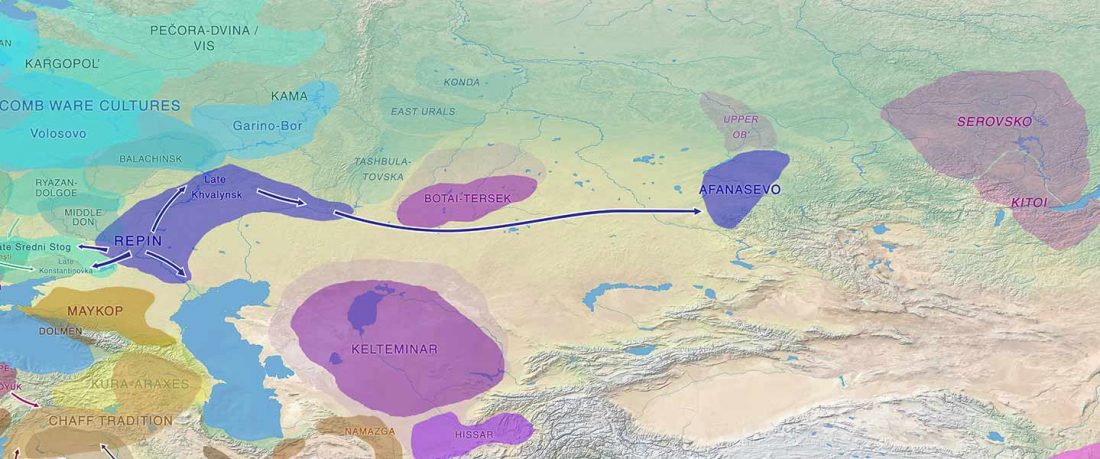
Proto-Tocharians: From Afanasievo to the Tarim Basin through the Tian Shan

tocharians-early-eneolithic

A reader commented recently that there is little information about Indo-Europeans from Central and East Asia in this blog. Regardless of the scarce archaeological data compared to European prehistory, I think it is premature to write anything detailed about population movements of Indo-Iranians in Asia, especially now that we are awaiting the updates of Narasimhan et al (2018).

Furthermore, there was little hope that Tocharians would be different than neighbouring Andronovo-like populations (see a recent post on my predicted varied admixture of Common Tocharians), so the history of both unrelated Late PIE languages would have had to be … Read the rest “Proto-Tocharians: From Afanasievo to the Tarim Basin through the Tian Shan”
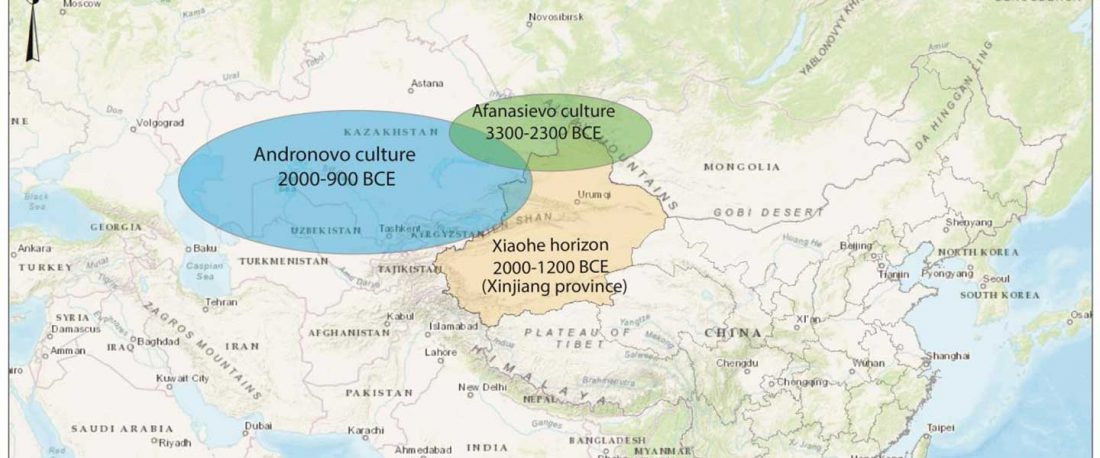
Bronze Age cultures in the Tarim Basin and the elusive Proto-Tocharians

andronovo-xiaohe-horizon

Master’s thesis Shifting Memories: Burial Practices and Cultural Interaction in Bronze Age China: A study of the Xiaohe-Gumugou cemeteries in the Tarim Basin, by Yunyun Yang, Uppsala University, Department of Archaeology and Ancient History (2019).

Summary excerpts, mainly from the conclusions (emphasis mine):

Both the Xiaohe and the Gumugou groups are suggested as possibly originating from southern Siberia or Central Asia and being related to Afanasievo and Andronovo people (Han 1986, 1994; Li et al. 2010, 2015). But a latest research suggest that the Xiaohe males are genetic distinct from the Afanasievo males, considering the paternal lineages (Hollard et

… Read the rest “Bronze Age cultures in the Tarim Basin and the elusive Proto-Tocharians”